Spiral Bevel Gear About
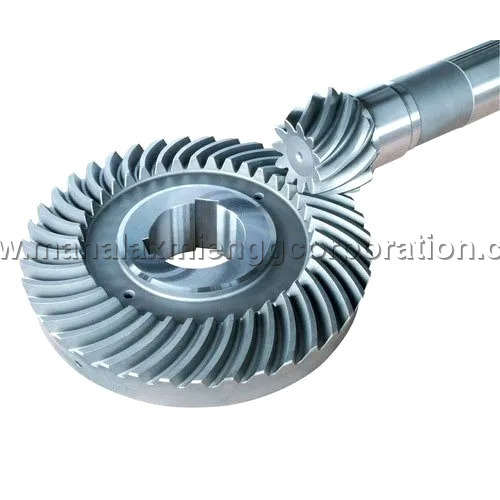
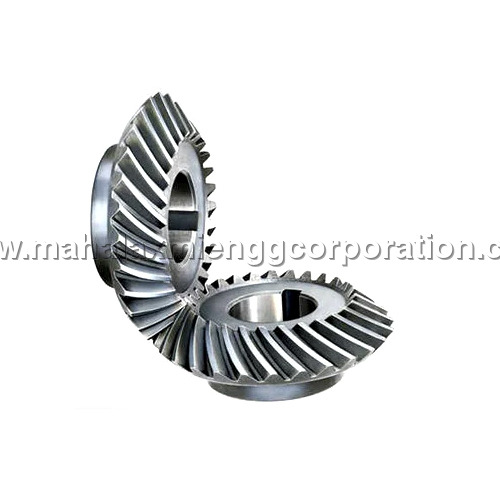
A Spiral Bevel Gear is a type of bevel gear with curved teeth that is designed to intersect and mesh smoothly. The teeth in spiral bevel gears are cut in a spiral shape, which allows for gradual contact and engagement as the gears rotate. This design minimizes impact and noise during operation and results in smoother operation, reduced noise, and improved load distribution. Spiral Bevel Gear is an excellent choice for applications where smooth power transmission, high torque, and reduced noise are essential. Their unique design characteristics make them suitable for various industries and applications that require reliable and efficient gear systems.
| Material |
Steel |
| Gear Type |
Bevel Gears |
| Usage/Application |
Industrial |
| Finishing |
Powder Coted |
| Direction |
Right Hand |
| Diameter range |
800 mm |
| Country of Origin |
Made in India |
Precision Engineering for Demanding IndustriesOur spiral bevel gears provide optimal torque transfer and efficient power distribution. Manufactured using high-grade steel, these gears are engineered for reliability and longevity in challenging industrial environments. Their unique spiral tooth design ensures quiet operation and reduced vibration, making them suitable for variable-speed machines and high-load conditions. Trusted by industries across India, our gears are an essential component for enhancing machinery performance and reducing operational downtime.
Tailored Solutions for Industrial NeedsWe offer spiral bevel gears specifically tailored for complex mechanical arrangements. Our expertise in bevel/miter gearing systems allows us to deliver gears that meet custom size, ratio, and finish requirements. Each gear undergoes rigorous testing to ensure compliance with stringent quality standards. Our commitment as a manufacturer and supplier is to meet industry-specific challenges while offering prompt delivery and excellent after-sales support throughout India.
FAQ's of Spiral Bevel Gear:
Q: How are spiral bevel gears different from other types of bevel gears?
A: Spiral bevel gears feature curved teeth, unlike straight bevel gears, which allows for smoother and quieter operation. This design reduces vibration and increases load-carrying capacity, making them suitable for high-performance industrial applications.
Q: What materials are used for the spiral bevel gears supplied by your company?
A: We manufacture our spiral bevel gears using high-strength steel, which enhances their durability and ability to withstand heavy industrial loads. The steel also provides resistance to wear and contributes to the high efficiency of the gears.
Q: When should spiral bevel gears be chosen over straight bevel gears?
A: Spiral bevel gears are recommended when the application requires smoother transmission, higher load capacity, and reduced noise. They are ideal for high-speed and heavy-duty industrial machinery where performance and reliability are crucial.
Q: Where are your spiral bevel gears commonly used?
A: Our spiral bevel gears are widely used in various industrial sectors across India, including automotive, mining, manufacturing, and power transmission equipment. They are especially suitable for machinery requiring efficient torque transfer at different angles.
Q: What is the process for manufacturing spiral bevel gears at your facility?
A: The manufacturing process involves precision machining, heat treatment, and grinding of high-quality steel. Each gear is carefully inspected for dimensional accuracy and performance to ensure it meets rigorous industrial standards.
Q: How can users benefit from choosing high-efficiency spiral bevel gears?
A: Users benefit through improved power transmission, longer service life, reduced maintenance, and energy savings. The high efficiency and robust construction of our gears help increase overall productivity and decrease operational costs.
Q: What usage guidelines should be followed to maximize the lifespan of spiral bevel gears?
A: Routine maintenance, including proper lubrication and regular inspection for wear or misalignment, is recommended. Following these guidelines ensures optimal performance and extends the operational lifespan of the gears in industrial environments.





 Send Inquiry

